Newsletter Subscribe
Enter your email address below and subscribe to our newsletter
Enter your email address below and subscribe to our newsletter

 ByJohn A
End-to-end encryption centers on keys only the communicating parties hold, ensuring intermediaries cannot decrypt content. It requires correct key management, trusted endpoints, and verified implementations. Certificates bind identities to keys, while passwords guard access. Real-world trade-offs arise in privacy, performance, and metadata, demanding layered controls and auditable processes. Myths are addressed through precise guidelines. The discussion closes with practical implications waiting to be explored, inviting critical assessment of how these elements fit within real systems.
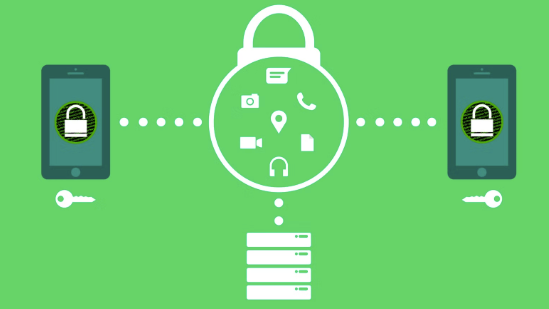
End-to-end encryption (E2EE) is a communication framework in which only the communicating parties hold the keys necessary to decrypt messages; intermediaries, including service providers, have no access to plaintext content. This section clarifies what E2EE truly delivers, distinguishing it from adjacent concepts. It debunks end to end myths, emphasizing that security rests on correct implementation, key management, and verified end-user practices.
Keys, certificates, and passwords form a layered authentication and encryption workflow that binds identity, trust, and access. The process specifies keys management as the core discipline: generating, storing, rotating, and revoking keys securely.
Certificates provide validated bindings between identities and public keys, enabling certificate validation.
Passwords reinforce access control, yet rely on robust storage and recovery practices to preserve overall security.
Real-world deployments of end-to-end encryption must balance three interdependent factors: privacy, performance, and metadata. In practice, privacy metrics quantify confidentiality gains but may increase latency and bandwidth cost, shaping performance tradeoffs.
System architects, seeking freedom, implement layered controls, monitor leakage, and calibrate tolerances.
Transparent reporting clarifies tradeoffs, enabling informed decisions without compromising core protections or user autonomy.
Myths surrounding end-to-end encryption are frequently reinforced by misconceptions about security, performance, and governance; this section debunks those myths and establishes clear, actionable guidelines for sound implementation.
The analysis remains detached, precise, and prescriptive, avoiding hype while guiding practitioners toward robust configurations.
Emphasis centers on privacy myths, rigorous key management, minimal metadata exposure, and auditable processes to sustain trust and control.
End-to-end encryption is not always the best privacy option. It depends on goals; it introduces privacy tradeoffs, potentially limiting safety measures. It preserves user autonomy while balancing accountability, security, and accessibility for diverse contexts and freedom-seeking audiences.
E2EE cannot fully conceal privacy metadata like timestamps and recipients; it protects content but not surrounding data. System designers should minimize metadata exposure, enforce device trust, and implement robust access controls to preserve user freedom while acknowledging residual leakage.
Yes, some E2EE apps perform automated message scanning for safety, though it contradicts end-to-end principles. This introduces privacy pitfalls and invites metadata concerns; practitioners should assess risk, transparency, controls, and user consent before enabling such scans.
See also: Emergency Communication Technologies
Law enforcement requests may compel access through privacy loopholes and legal exceptions, potentially exposing metadata. In practice, device attestation and targeted warrants constrain prosecutors, while rigorous audits guard integrity; users seek freedom, yet compliance narrows privacy expectations.
Answering: no, one cannot reliably verify a recipient’s device integrity. Untrusted devices undermine certainty; remote attestation may help, but satire aside, verification remains conditional, methodological, and parametric, preserving principled skepticism for audiences prioritizing freedom.
End-to-end encryption rests on a disciplined chain: robust key management, trusted identities, and accessible safeguards. When keys stay with endpoints and certificates verify bindings, intermediaries cannot decrypt content, but user practices and implementation choices determine real-world security. The theory holds under correct deployment; vulnerabilities arise from weak passwords, poor key rotation, or compromised devices. Practical security requires auditable processes, clear governance, and layered controls that reinforce privacy without sacrificing usability. In short, E2EE works, but only through diligent, ongoing discipline.