Newsletter Subscribe
Enter your email address below and subscribe to our newsletter
Enter your email address below and subscribe to our newsletter

 ByJohn A
Most towing businesses start the same way. One operator, one truck, work taken as it comes, and a phone that rings at inconvenient hours. It is a viable business and it has a natural ceiling, which is the number of hours one person can work and the number of calls one vehicle can attend.
Growing past that point is not simply a matter of buying another truck. The second vehicle changes the business into something that has to be managed rather than performed: staffing, dispatch, contracts, compliance, and equipment decisions all appear at once, and operators who add capacity without addressing them frequently find the second truck makes less money than the first.
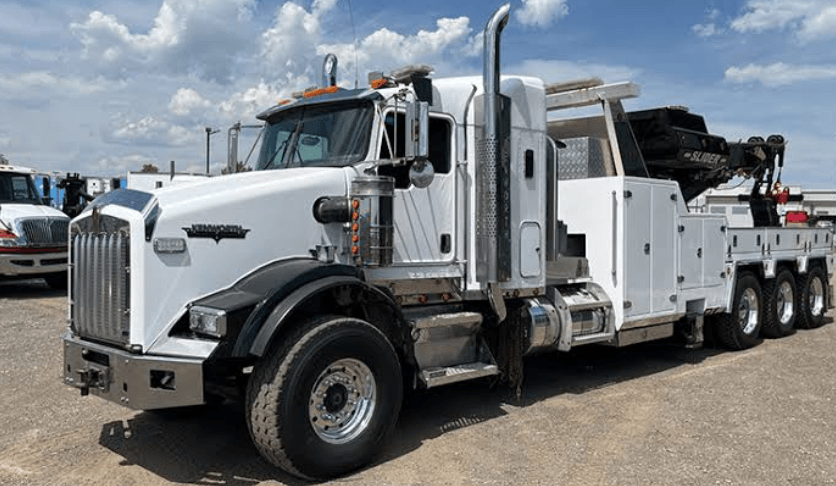
Planning Custom Tow Truck Builds around where the business is going, rather than around the work it does today, is one of the decisions that determines whether that transition works.
Growth generally means diversifying the sources of calls, and each source behaves differently.
Motor club and roadside assistance contracts provide steady volume at rates set by the club rather than by you. They fill time reliably, they pay less per call than private work, and they impose response time requirements that shape how you staff and where you position vehicles.
Police rotation and municipal work, where available, provides consistent volume and comes with requirements: response times, equipment standards, storage facilities, insurance minimums, and inspections. Getting onto a rotation takes preparation and holding a place on it takes compliance.
Private and consumer calls pay the most per job and arrive least predictably. Their volume depends on visibility, meaning search presence, reviews, and reputation.
Commercial accounts with dealerships, fleets, repair shops, and property managers provide repeat business at negotiated rates and are among the most valuable relationships a growing operator can build, because they are predictable and they do not require competing on price at the moment of need.
Impound and recovery storage generates revenue beyond the tow itself and requires facilities and compliance with the rules governing vehicle storage.
A business relying on one source is exposed to losing it, and diversification is as much a risk decision as a growth one.
The second and third vehicles should extend capability rather than duplicate it, unless volume alone is the constraint.
If the first truck is a wheel-lift wrecker, a carrier is usually the right second unit, since it handles damaged vehicles, all-wheel-drive casualties, and multiple-vehicle jobs that the first cannot.
If the first is a carrier, a wrecker adds recovery capability and urban manoeuvrability.
Heavy recovery is a substantial step involving a different class of equipment, different licensing, different training, and different insurance. It opens commercial work at higher rates and it should follow demonstrated demand rather than anticipation of it.
Support equipment, meaning dollies, go-jacks, recovery rigging, and lighting, extends what existing trucks can handle at a fraction of the cost of another vehicle, and this is frequently the better investment before adding a unit.
Standardizing controls and equipment across the fleet matters as soon as there is more than one driver, since any driver being able to work any truck is what makes scheduling possible.
Staffing is where most growing towing operations struggle, and it arrives immediately with the second truck.
Finding operators is genuinely difficult. The work is physical, the hours are unsocial, and the skill takes time to develop. Operators who train people tend to do better than those waiting to hire experienced staff.
Training is a safety and liability matter as much as an operational one. Recovery work at a roadside is among the more dangerous jobs there is, and an undertrained operator is a risk to themselves and an exposure to the business.
Certification, where available, is worth pursuing both for competence and because contracts increasingly ask about it.
Retention matters disproportionately in a small operation, since a departing operator takes knowledge, customer relationships, and immediate capacity with them.
Scheduling around unpredictable call volume, particularly overnight coverage, is the operational puzzle that defines this business, and it needs a deliberate structure rather than an assumption that someone will answer.
The requirements increase with size and they arrive faster than expected.
Insurance costs rise with vehicles and drivers, and on-hook and garage keepers coverage are specific to this business and worth understanding properly.
Licensing and permits vary considerably by jurisdiction and often by municipality, and operating across boundaries can mean multiple sets of requirements.
Regulations covering driver hours, vehicle inspection, and record keeping may apply once the fleet or the vehicle weights cross thresholds.
Storage facility requirements apply to anyone holding vehicles, with rules covering security, access, and notification.
Rate regulation exists in some jurisdictions for certain classes of tow, and non-compliance is a serious matter.
The practical point is that compliance requirements should be checked before expanding rather than after, since discovering a requirement retrospectively is expensive.
The transition works when the additional capacity has work waiting for it.
Secure the contracts or accounts before the vehicle arrives, since a truck sitting idle while you look for work is the most expensive mistake available at this stage.
Understand your cost per call properly, including vehicle, fuel, labour, insurance, and overhead, because growth on work priced below cost simply accelerates the problem.
Invest in dispatch, even something simple, since coordinating two trucks by memory and mobile phone stops working quickly.
Build the maintenance discipline first, because a two-truck operation with one vehicle down is at half capacity, and the availability that made the first truck profitable is what the second one depends on as well.